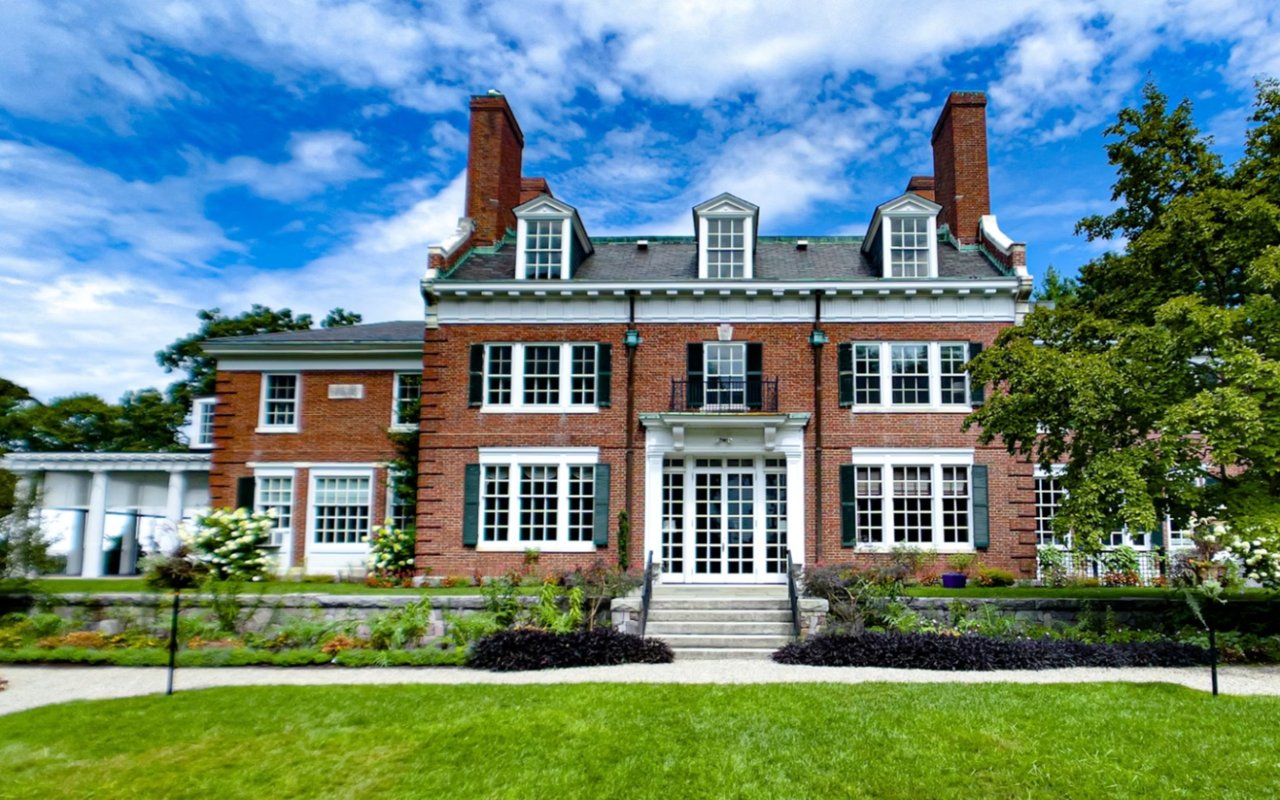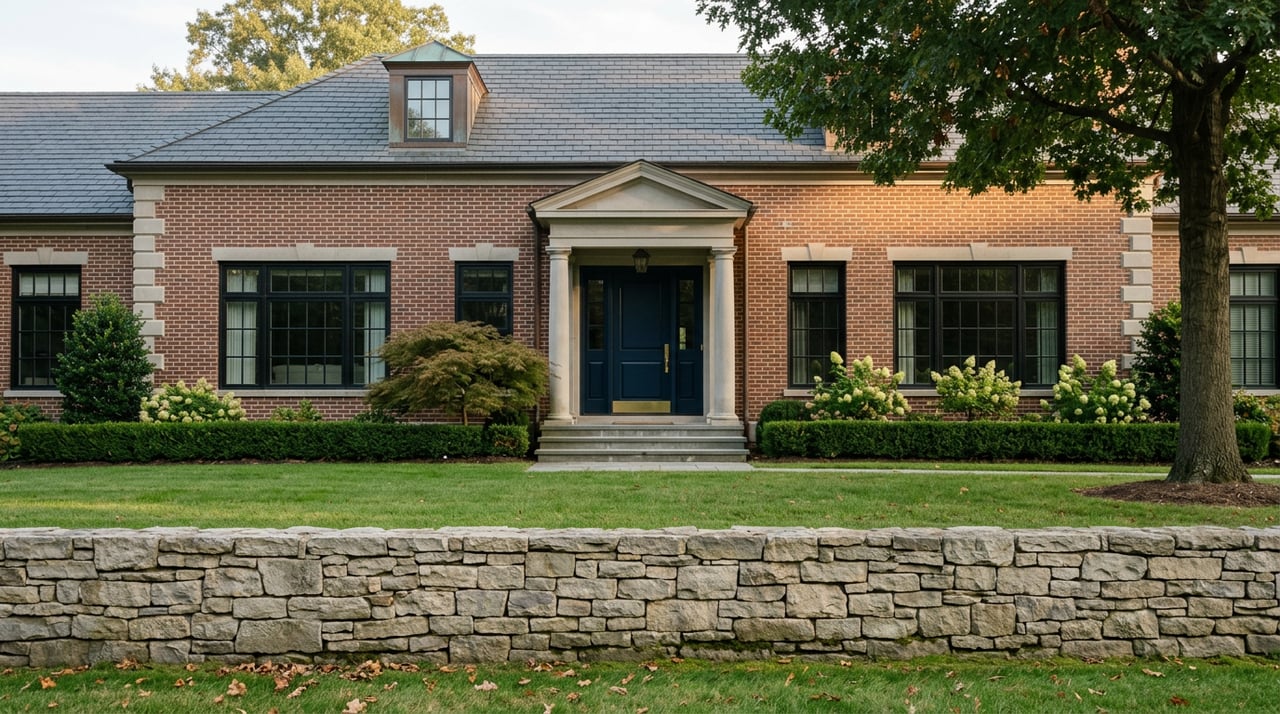
If you drive down Durie Avenue in Closter, you have probably slowed down at the fence around 511 Durie. The old Village School has sat behind that fence for so long that most residents stopped asking what was happening there. The building is unmistakable: red brick, a century of window trim, the kind of solid civic architecture towns don't build anymore. It closed as a school in 1996. For most of the thirty years since, it has been the kind of landmark you point out to a new neighbor without being able to explain why it's still empty.
This year, that changed. On January 21, 2026, Mayor John Glidden and a group of borough officials, state housing representatives, and development partners turned shovels on the site. The building is becoming Village School Commons, a 35-unit income-restricted rental community, with the original facade preserved and a new attached structure built to match. Construction is expected to wrap in 2027.
The story of how it got there is more interesting than the ribbon cutting suggests, and it says something about how change actually happens in a small Bergen County borough that has spent decades protecting the look of what it already has.
Three Decades of Proposals Nobody Could Land
The Village School wasn't idle by accident. Closter tried, more than once, to figure out what to do with it. Over the years the site cycled through age-restricted housing, inclusionary housing, straightforward affordable housing, and mixed-use concepts, according to reporting from Pascack Press and Northern Valley Press. Each one ran into the same tension: how to meet the borough's housing obligations without erasing a building that had defined the corner of Durie and High Street since before Closter was even incorporated in 1904.
The borough bought the building in 2017 for $2.75 million with affordable housing already in mind, which meant asbestos remediation before anyone could touch a floor plan. In 2019, the Zoning Board of Adjustment voted 7-0 to approve a use variance for a 35-unit affordable complex, then known by the working name Village Knoll, developed in partnership with the Housing Authority of Bergen County. That approval came with a court-approved settlement behind it and a payment in lieu of taxes arrangement estimated at roughly $21,645 a year for thirty years.
And then, mostly, nothing happened for years. Zoning approval is not financing, and financing for 35 income-restricted units is its own project. The building sat.
What Actually Moved It
What finally got shovels in the ground wasn't a change of heart about the building's future. It was the machinery that makes affordable housing financially possible: a stack of 4 percent Low-Income Housing Tax Credits, tax-exempt bond financing, construction lending, and public subsidy through the New Jersey Housing and Mortgage Finance Agency, arranged by a new developer, Mastermind Development LLC. That closing is what turned a decade of approvals into an actual construction schedule.
Mayor Glidden framed it plainly at the groundbreaking: "Village School Commons allows us to meet our affordable housing obligations while protecting a site that holds deep significance for our residents." Mastermind's president, Radame Perez, called the closing "a promise kept to the Closter community."
The honest read is less sentimental than either quote. Closter didn't solve the Village School because the town reached consensus on what it wanted there. It solved it because a state financing mechanism finally assembled the capital that thirty years of local proposals could not. The building's preservation is a genuine outcome, but it arrived downstream of a legal settlement and a tax credit closing, not a neighborhood vote.
An Old Building Doing an Old Job
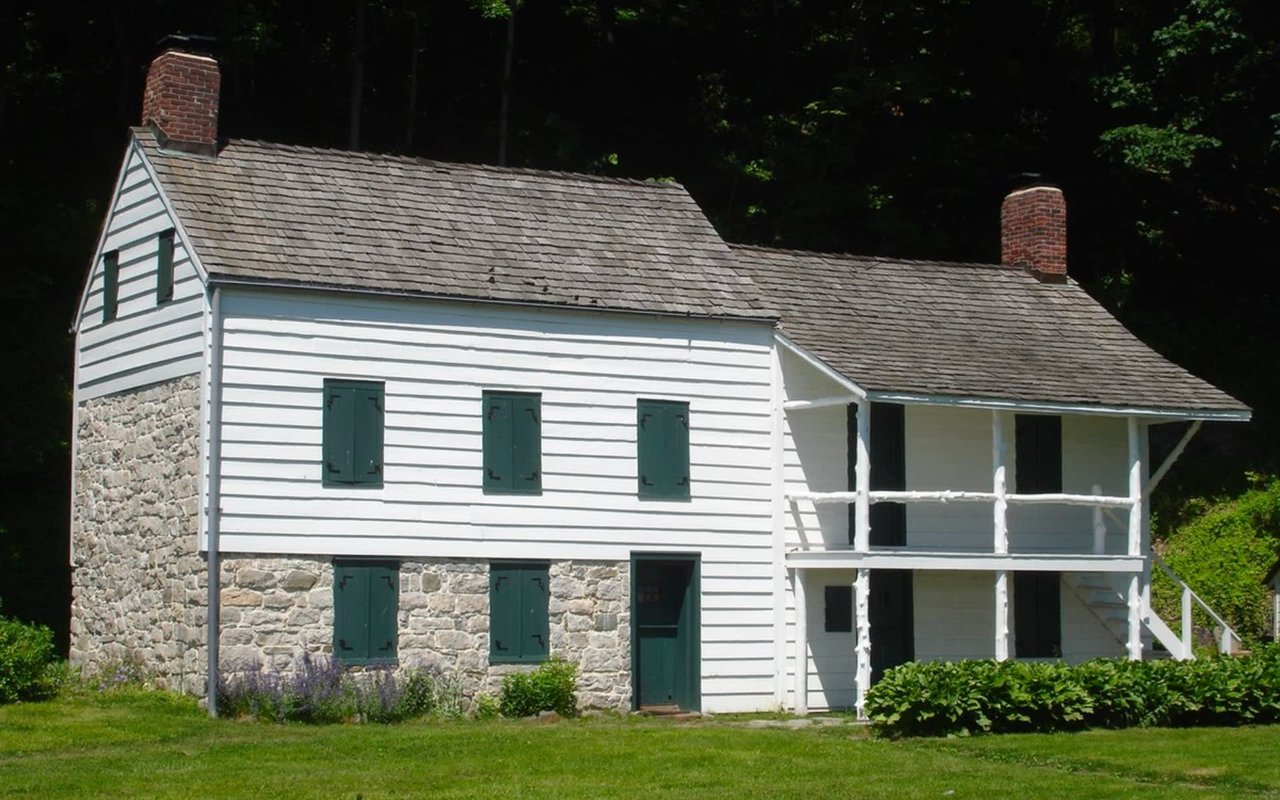
There's a detail in the local reporting that gives the project more weight than a typical affordable housing groundbreaking. Closter has done this before. The building that predated the Village School, a small schoolhouse built in 1871, was itself eventually converted into apartments and still stands at 483 Durie Ave, just down the street from the site now under construction.
Local historian Kristin Beuscher has traced how the Village School's own story mirrors the borough's growth: a four-room school at Durie and Demarest could no longer handle the population once the railroad turned Closter from a rural settlement into a commuter suburb, so voters approved buying the Bloomer property at Durie and High Street, and the current building opened there in 1900. Architect William J. Martin, who worked on the redevelopment, put the logic behind reusing it simply: the most sustainable building, he said, is the one that already exists.
Two schools, a century and a quarter apart, on the same short stretch of Durie Avenue, both eventually becoming housing rather than being torn down. That's not a coincidence you'd find by looking at the building in isolation. It only shows up when you look at the street.
The Rest of Town Is Filling In at the Same Time
The Village School is the slowest-moving story in Closter this year, but it's not the only one. A few other corners of the borough have quietly changed shape in 2026, and they show a different kind of momentum entirely, one driven by ordinary market appetite rather than a court settlement.
In March, a new food hall called Stop & Eat opened at 218 Closter Dock Road, running several in-house concepts, including a chicken finger brand and a dessert counter, out of one space designed for quick, mix-and-match orders. In April, the borough's business community announced a new summer concert series, Concert Corner, staged at Closter Plaza, the same shopping center that has anchored the town's retail since it was redeveloped nearly a decade ago. In May, Mayor Glidden and the council held a ribbon cutting for Birch Dental Studio, a new practice joining the borough's small business roster. And Closter Farm and Livestock Co, the year-round farmstand on Closter Dock Road that describes itself as the only certified organic meat operation in New Jersey, has kept its stand open seven days a week through the summer, the kind of steady local fixture that doesn't make news but shapes a Saturday morning routine all the same.
None of that required a court order or a state financing agency. A restaurant group saw demand for a food hall concept and leased the space. A chamber of commerce organized a concert series because plazas do better with foot traffic after 6pm. A dentist opened a practice because there was room for one. That's the other half of what's happening in Closter this year: private ambition filling gaps at its own pace, while a public institutional building took three decades and a legal settlement to fill its own.
What This Adds Up To
Closter isn't a town that changes quickly, and the Village School's timeline proves it in the most literal way possible: thirty years from closure to groundbreaking, and even after the 2019 zoning approval, seven more years before anyone actually broke ground. But 2026 has been a year where several different kinds of change landed at once, on different timelines and for entirely different reasons. A landmark building finally moving because a financing mechanism finally worked. A handful of small businesses opening because the market said yes faster than the building code ever did.
If you live in Closter, both of those are worth watching, for different reasons. The Village School will be finished sometime in 2027, and the preserved facade means the corner of Durie and High Street will look, from the street, almost exactly like it always has. What's inside will be entirely new. That's usually how the most interesting changes in a small town work: quietly, behind a fence, until one day the fence comes down.
If you're curious about how Closter's small changes connect to its housing market, or you just want a local perspective on the borough beyond this year's headlines, The Kolsky Team keeps a running account of what's happening on Closter's side streets, not just its listings.